About NAT-Net

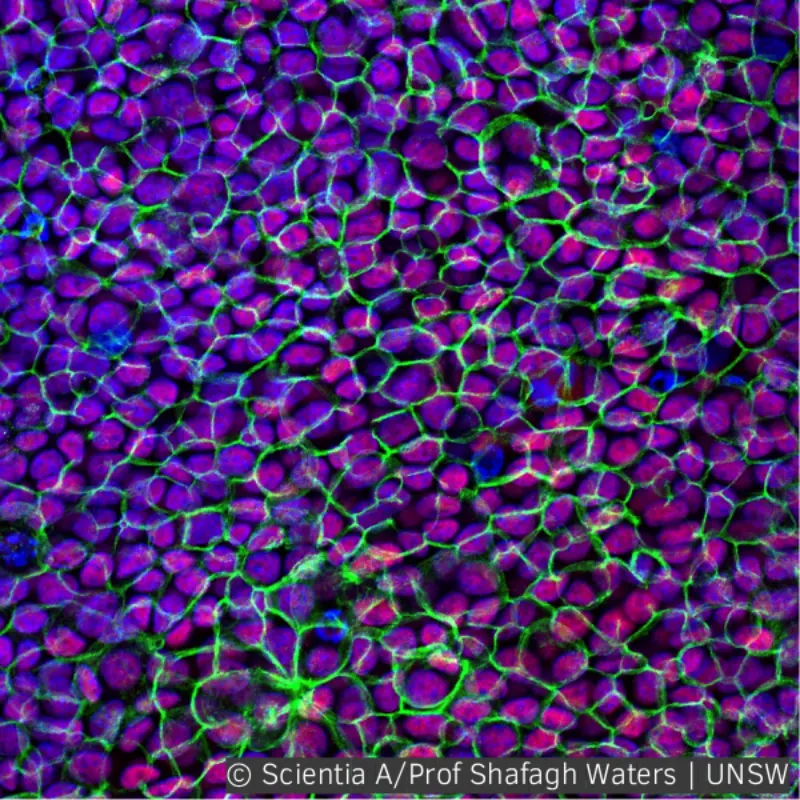
A/Prof Shafagh Waters, Regeneration and Stem cell Translational Research Group, UNSW

What is NAT-Net?

The Non-Animal Technologies Network (NAT-Net) is a collaborative initiative that accelerates the development and adoption of innovative non-animal technologies in medical research.

Established in 2024 with AUD $4.5 million investment from NSW Government and administered by the University of New South Wales (UNSW), NAT-Net connects researchers, industry, regulators and policymakers to build a more predictive, human-relevant research ecosystem.

NAT-Net complements traditional approaches by promoting models that are designed around human biology, helping improve scientific impact and support better outcomes for patients.
Why NAT-Net now?

Many therapies that look promising in animal studies do not become effective treatments for people. A 2024 PLOS Biology meta-analysis found that while about half of therapies progressed from animal studies to any human study, only around 5% achieved regulatory approval. This shows that animal data often fails to predict how medicines will work in humans.

Australia’s national science agency, CSIRO, has highlighted non-animal models as a strategic opportunity to strengthen medical product development and keep the clinical trials sector competitive. Models such as complex in vitro systems and organoids can be scaled if supported by coordinated action.

This translational gap coincides with global momentum towards investing in human-relevant alternatives, setting clear targets to reduce and replace animal testing. Roadmaps, funding programs and regulatory collaborations are building confidence in non-animal methods and encouraging their use in real regulatory decisions.

NAT-Net was created to provide that coordination and to help move these approaches from promising pockets of activity into a connected national effort.

NAT-Net positions Australia
to participate in, and benefit from,
this global shift toward
human-relevant science.

Why NAT-Net?

This translational gap coincides with global momentum towards investing in human-relevant alternatives, setting clear targets to reduce and replace animal testing. Roadmaps, funding programs and regulatory collaborations are building confidence in non-animal methods and encouraging their use in real regulatory decisions.

Secret Link