



NAT-Net acknowledges Australia’s Traditional Owners and pays respect to the past and present Elders of the nation’s Aboriginal and Torres Strait Islander communities. We honour and celebrate the spiritual, cultural, and customary connections of Traditional Owners to the country and the biodiversity that forms part of that country.

Erica Bremner Kneipp
Independent Chair
View LinkedIn Profile
Erica Bremner Kneipp is an experienced senior executive with more than three decades of leadership across Commonwealth and state governments, national research institutions, and the not-for-profit and private sectors.
She has led nation-building initiatives that have transformed hospital funding, primary care, remote healthcare delivery, and the health and medical research and innovation landscape. Of note was her role in establishing the Australian Government’s 20-billion-dollar endowment
Medical Research Future Fund (MRFF) and the 500-million-dollar Biomedical Translation Fund (BTF) and driving national clinical trial reform that underpins the National One Stop Shop.
She currently leads a diverse research program in Health and Biosecurity at CSIRO, Australia’s national science agency, with responsibility for zoonotic pathogens, vector-borne diseases, disease surveillance and modelling, and public health Erica is also a Non-Executive Director of AusBiotech (the peak body for the life sciences sector), Bioplatforms Australia (which provides national infrastructure and expertise in genomics, proteomics, metabolomics, synthetic biology and bioinformatics to drive scientific innovation) and Brandon Biocatalyst Australasia’s largest life science venture capital firm).
Erica has taken on the role of independent chair of the NAT-Net consortium, and brings experience in research translation, funding system design, and health policy, championing non-animal technologies as a critical pathway to faster, more equitable and ethically grounded health impact.
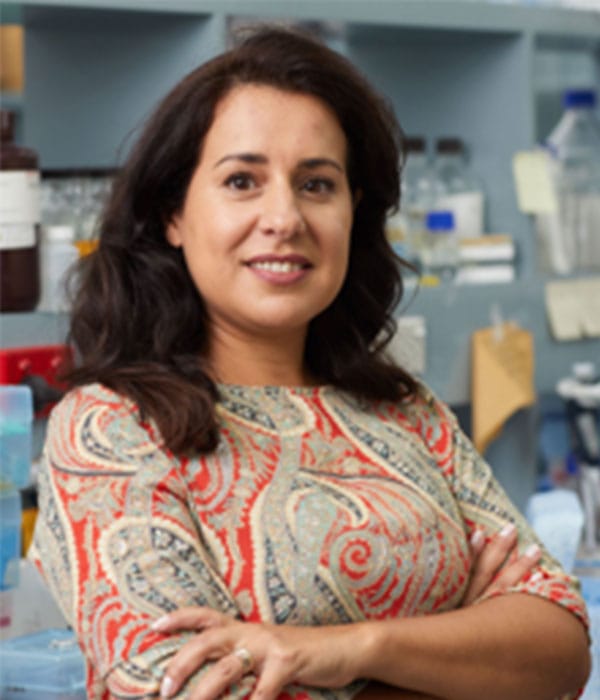
A/Prof Anai Gonzalez-Cordero
Executive Committee
Visit Website
Associate Professor Anai Gonzalez-Cordero is an Al & Val Rosenstrauss Fellow, Group Leader of the Stem Cell Medicine Group at Children’s Medical Research Institute, Head of the Stem Cell & Organoid Facility and holds a Senior Lecturer appointment in the Faculty of Medicine and Health at The University of Sydney.
Anai has established a multidisciplinary program to use patient-derived 3D retinal organoids that closely mimic human retinal disease, enabling precise gene-editing approaches to correct disease-causing mutations using CRISPR (Clustered Regularly Interspaced Short Palindromic Repeats)-based strategies. She has demonstrated proof-of-concept that transplanted photoreceptor cells grown in the lab can restore visual function in preclinical models, and her facility has developed neural, cardiac, kidney and lung organoids that support researchers across Australia.
Anai brings to NAT Net deep expertise in stem cell–derived human models and a commitment to accelerating non-animal technologies so that safer, more effective treatments reach patients faster, having also served as NAT Net’s interim Chair in its formative year.

Scientia A/Prof Shafagh Waters
Executive Committee
Visit Website
Associate Professor Shafagh Waters is a Scientia Fellow at UNSW and an Honorary Senior Scientist at Sydney Children’s Hospital, where she leads the Waters Group in regenerative and stem cell translational medicine. Her research focuses on adult stem cell biology, disease modelling and precision therapies for cystic fibrosis and other rare diseases, using patient-derived airway and gut organoids to guide individualised treatment decisions.
Shafagh has built a national biobank of stem-cell-derived organoids and a high-throughput therapy-testing platform, enabling industry and clinical collaborators to evaluate genotype-specific therapies directly in patient cells. She has led an NHMRC-funded program supported by more than 30 grants, including 21 as Chief Investigator A, and is widely recognised for integrating organoid modelling, multi-omics and computational analysis to accelerate translation to the clinic.
As a founding member of NAT‑Net, Shafagh champions human-relevant organoid platforms as cornerstone tools to replace animal testing and deliver faster, more accurate solutions for people living with rare and chronic disease.
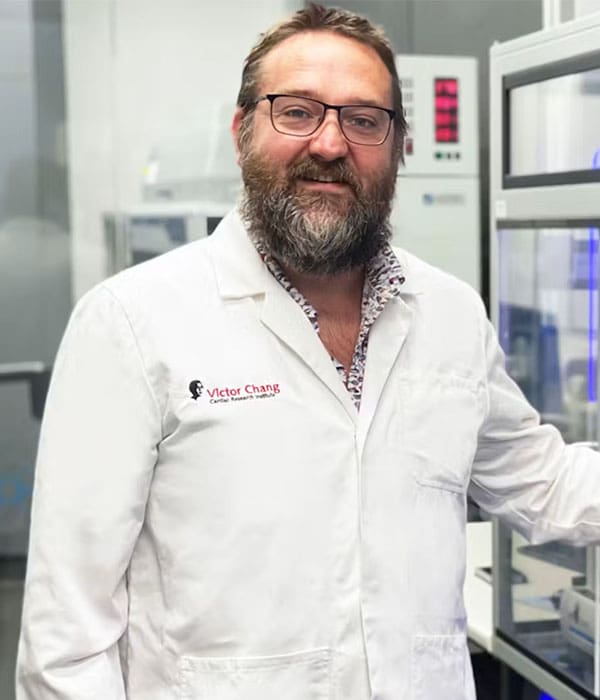
A/Prof Adam Hill
Executive Committee
Visit Website
Associate Professor Adam Hill leads cardiovascular research at the Victor Chang Cardiac Research Institute, and is conjoint Senior Lecturer at St. Vincent’s Clinical School, University of New South Wales. Adam is vice president of the Australian Society for Biophysics, council member of the International Society for Heart Research, and member of Cardiac Society of Australia and New Zealand, The Biophysical Society (USA), and the Australian Physiological Society. His work focuses on complex multisystem organoids that replicate human physiology, enabling more predictive testing of novel therapies over traditional animal models.
Adam has pioneered 3D-engineered heart tissues and beating cardiac organoids from stem cells, accelerating discoveries in cardiovascular therapeutics while reducing animal use for preclinical studies. He drives interdisciplinary collaborations across NSW research hubs, integrating organ-on-a-chip platforms with computational modelling to bridge lab innovation and clinical translation.
As a founding NAT-Net partner, Adam champions human-relevant models to deliver faster, more reliable cardiac treatments, ensuring ethical progress that better serves patients.
A/Prof Gerard Kaiko
Executive Committee
Visit Website
Associate Professor Gerard Kaiko is Theme Leader for Stem Cells and Organoids in Mucosal Diseases at the Hunter Medical Research Institute and University of Newcastle, where he directs research on mucosal organoids for drug discovery in ulcerative colitis, Crohn’s disease, cystic fibrosis, bronchiectasis, and asthma. His group develops patient-derived organoids from lung and gastrointestinal tissues to model disease, develop therapies, and enable precision medicine through personalised screening assays.
Gerard has pioneered Australia’s first organoid-guided clinical trial (ORIGIN-1) to match cystic fibrosis patients to optimal therapies and improve access for patients through precision medicine. He has also advanced exosome-based RNA delivery systems funded by NSW Medical Research Support Program grants. He has high-impact publications in Signal Transduction and Targeted Therapy, Cell, Science and Science Translational Medicine using stem cells to study mucosal diseases and has identified several new therapies and biomarkers of disease, which are in their translation journey towards the clinic.
As a NAT-Net representative from the University of Newcastle, Gerard drives organoid platforms and humanised assays to replace animal models, accelerating ethical, patient-specific treatments for chronic mucosal diseases.
Prof Simon Keely
Executive Committee
Visit Website
Professor Simon Keely is Professor of Immunology and Microbiology in the School of Biomedical Sciences and Pharmacy at the University of Newcastle, and Director of the Immune Health Program at the Hunter Medical Research Institute, leading the Gastrointestinal Research Group. Gerard is also the Co-Founder of the Newcastle Human Organoid Program for Effective New Therapies. His research investigates host-microbiome-immune interactions in gastrointestinal disorders including inflammatory bowel disease, irritable bowel syndrome and functional dyspepsia, using advanced models to uncover molecular mechanisms of disease.
Simon has secured NHMRC funding as chief investigator for the Centre of Research Excellence in Digestive Health, publishing extensively on diet-microbiome effects, eosinophil-driven barrier dysfunction and pulmonary-intestinal crosstalk in high-impact journals like Mucosal Immunology. He integrates clinical assays, in vivo studies, and microbiome analysis to translate findings into improved therapies and dietary interventions for chronic gut conditions.
As a NAT-Net contributor, Simon advances human-based GI models and microbiome platforms to replace animal testing, delivering precise, ethical solutions for digestive health challenges.

Distinguished Prof Gordon Wallace
Executive Committee
Visit Website
Intelligent Polymer Research Institute Director and Distinguished Professor, Gordon Wallace is involved in the design and discovery of new materials as well as the development of innovative fabrication and characterisation methods.
He has published in excess of 1,300 refereed journal publications that have attracted more than 110,000 citations with an H-index of 154. He is listed as a co-inventor on more than 60 patents.
He was appointed as an Officer of the Order of Australia 26 January 2017. Gordon was named NSW Scientist of the Year 2017. He received the Eureka Prize for Leadership in Science and Innovation in 2016. Gordon is a Fellow of the Australian Academy of Science, Australian Academy of Technological Sciences and Engineering (ATSE), and Royal
Australian Chemical Institute (RACI). He is a corresponding member of the Academy of Science in Bologna. He was elected to the Royal Irish Academy in 2023.
As a NAT-Net advocate, Gordon champions biofabrication and human-cell interfaces to replace animal models, accelerating ethical deployment of next-generation therapies.

Prof Wojchiech Chrzanowski
Executive Committee
Visit Website
Professor Wojciech Chrzanowski is Head of the Nano-Medical Innovations Group at the University of Sydney, where he leads three pioneering research laboratories: the Nano- BioCharacterisation Lab, the Laboratory for Non-Animal Models, and the BioNanoTechnology Facility, all within the Faculty of Medicine and Health. His research
focuses on extracellular vesicles, nanoscale particles such as exosomes and microvesicles that play a critical role in cell-to-cell communication. These particles hold transformative potential in drug delivery, diagnostics, and therapeutics.
A committed advocate for ethical research practices, Professor Chrzanowski actively develops and champions non-animal models as alternatives to traditional animal testing, advancing more humane and innovative
approaches to biomedical research. His work has made landmark contributions to understanding the biophysical and biochemical properties of extracellular vesicles and their interactions with cells, tissues, and biomaterials. His facilities house cutting-edge instrumentation purpose-built for the analysis of these complex biological structures.
A prolific scholar, Professor Chrzanowski has authored more than 200 peer-reviewed publications, cited over 10,000 times globally. His excellence has been recognised through 16 international and national awards, including the prestigious 2019 Barry Inglis Medal from the National Measurement Institute, the 2018 Vice Chancellor’s Award for Excellence in Research and Education, the 2018 Best Presentation Award from the International Society for Extracellular Vesicles, and the 2018 Outstanding Paper Award from the Royal Society of
Chemistry.
As a NAT-Net Chief Investigator, Wojciech drives human-relevant nano-models and organoid assays to replace animal experimentation, enabling faster, sustainable paths to clinical impact.
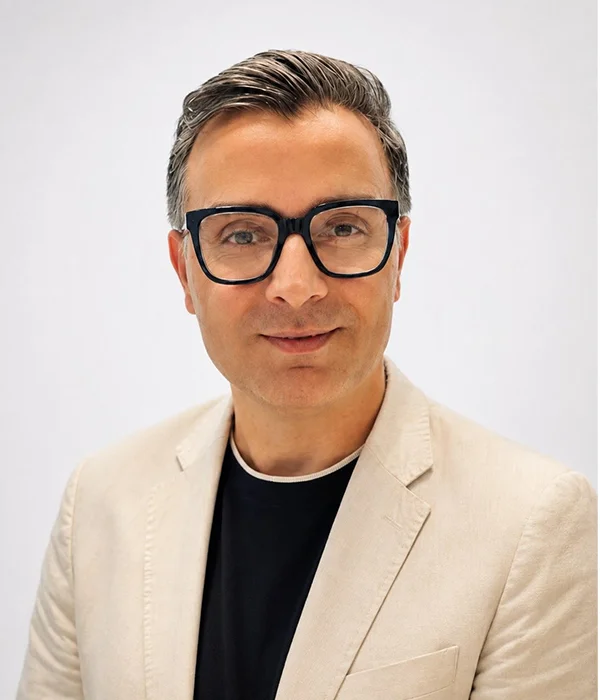
Prof Majid E. Warkiani
Executive Committee
Visit Website
Professor Majid E. Warkiani is currently a Professor at the American University of Sharjah (AUS), UAE, and Director of the Advanced Biosciences and Bioengineering Research Center (ABSBERC), where he leads research in biomedical engineering, microfluidics, and translational bioengineering. He was formerly a Professor in the School of Biomedical Engineering at the University of Technology Sydney (UTS), Australia, and remains affiliated with the Institute for Biomedical Materials & Devices (IBMD) at UTS.
He received his PhD in Mechanical Engineering from Nanyang Technological University (NTU), Singapore, under the prestigious SINGA scholarship from A*STAR, and undertook postdoctoral training at the Massachusetts Institute of Technology through the SMART Centre. His research focuses on three key areas: microfluidics for the design and development of novel systems for particle and cell sorting, including circulating tumour cells, fetal cells, and stem cells, for diagnostic and therapeutic applications; organ-on-a-chip technologies to model physiological functions of tissues and organs; and liquid biopsy for precision medicine.
As a NAT-Net contributor, Professor Warkiani advances non-animal technologies through development of novel 3D microfluidic and organ-on-chip platforms, enabling faster, more ethical pathways from laboratory discovery to patient therapies.
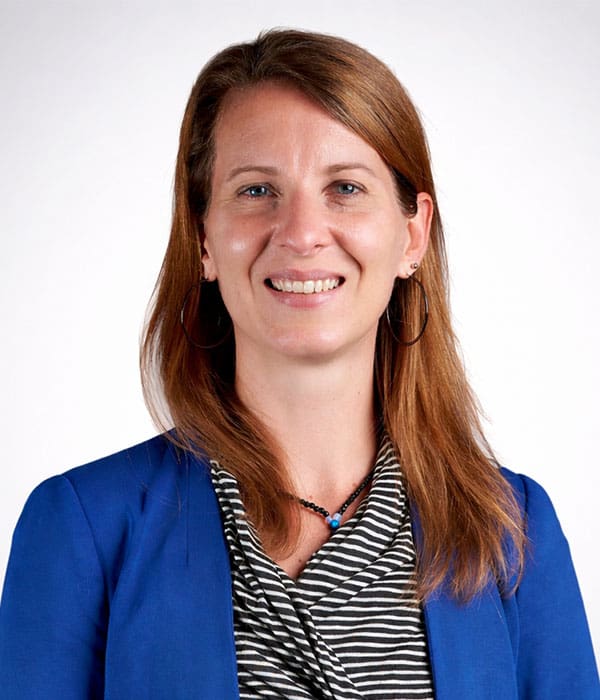
Esther S. Pronker, PhD
Coordinator
View LinkedIn Profile
Ms Esther S. Pronker PhD serves as NAT-Net Coordinator, where she manages the consortium’s grant processes, executive committee operations, and nationwide communications to advance the non-animal technologies network. With a proven track-record in stakeholder engagement, she bridges researchers, industry, government, and community partners to foster collaboration, innovation, and impact.
Esther has coordinated competitive grant applications across pharmaceutical and biotech initiatives for NHMRC, MRFF and Wellcome Trust, for a combined value of over $90 million in funding. She spearheaded the 2023 Vaccine Value Chain conference and developed several entrepreneurship programs to support academic spin-outs. With over 20 peer-reviewed publications, she brings global expertise in innovation management and community building across health, biotech, and sustainability sectors.
As NAT-Net Coordinator, Esther manages collaborative initiatives, support leadership and governance processes, ensure compliance with research, ethical, and policy requirements, and facilitate engagement across national and international communities.